Braiding is an ancestral technique for assembling threads
There are countless ways to assemble yarn and threads to create a fabric. Techniques like weaving, knitting, or crocheting are widely recognized, even outside the textile industry. However, one essential method is often overlooked: braiding.
Yet, braids are everywhere in our daily lives. From shoelaces and hoodie drawcords to candle wicks, fiber optics, heating cables, boat ropes, and climbing cords—braiding plays a crucial role in modern manufacturing. Among the four main methods of thread assembly, braiding is unique: it is the only one that does not naturally exist in wide widths (large laize).
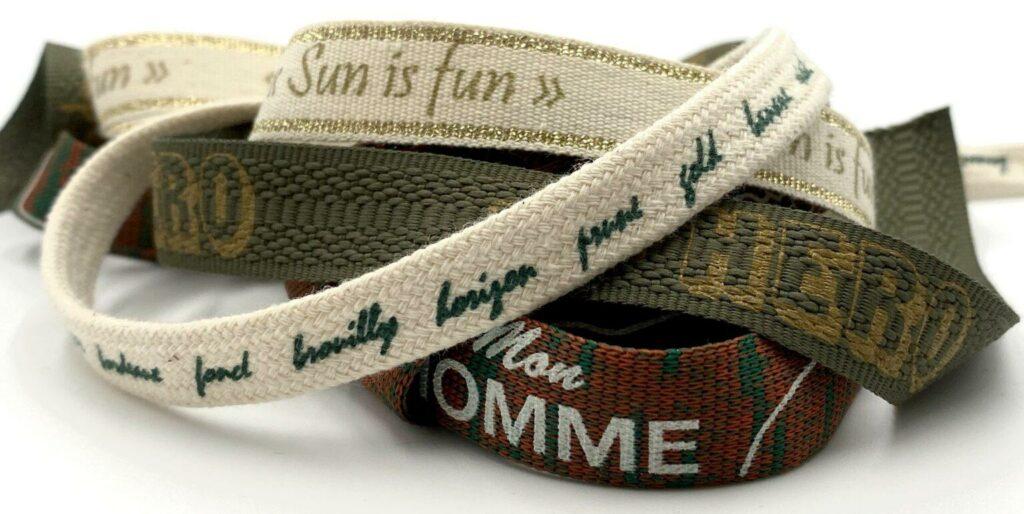
At our Braiding Workshop, we sell high-quality narrow textiles by the meter, including straps, woven ribbons, knitted and braided cords, as well as woven or braided piping. Our expertise goes far beyond simple braids, blending traditional weaving, knitting, and braiding techniques. We also offer immersive workshops and training sessions to learn braiding on traditional wooden looms and manual hand-braiding on Marudai looms, available for booking directly on this website.
But fundamentally, what is braiding? Let’s dive into its definition, history, and applications.
Definition and Mechanism
To answer the question “what is braiding?”, we must look at the structural geometry of the threads.
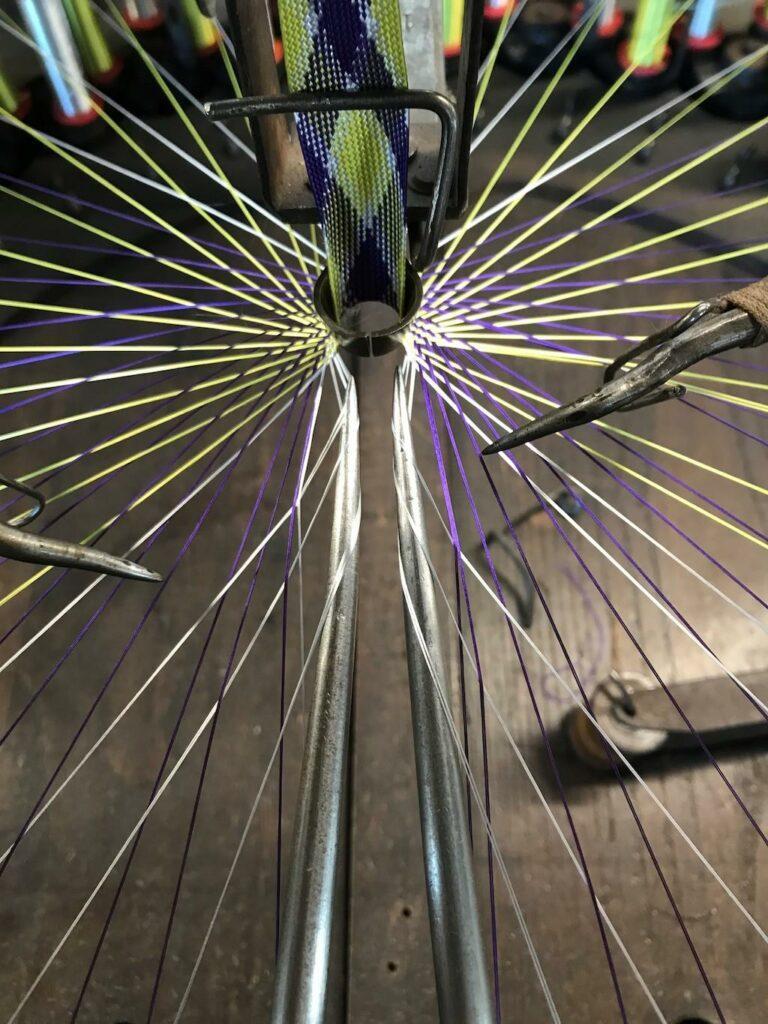
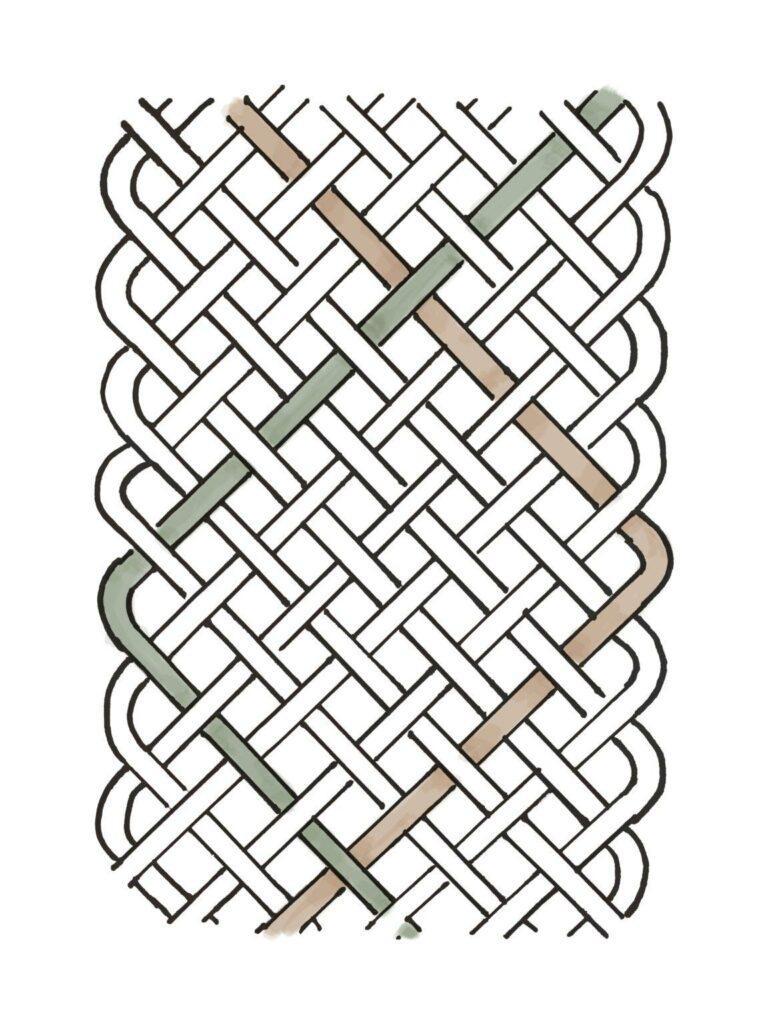
A braid is the result of an oblique interlacing of threads that forms a narrow textile band or cord. Unlike weaving—where warp and weft threads intersect at right angles (90 degrees)—braiding relies on threads running diagonally in a “zigzag” pattern, crossing over and under each other in opposite directions.
This interlacing creates a strong, flexible mesh. In 1783, during the presentation of the famous Perrault wooden loom at the Conservatoire des Arts et Métiers, a precise definition of a braid was documented:
“All threads have identical functions, and each of them perpetually runs sideways and in a zigzag from one edge to the other, passing alternatively over or under one or several threads they meet along their path.” (Louis Joseph Gras, p. 690).
The Different Types of Braids
When exploring what is braiding, it becomes clear that braids are not all made the same way. The most common and classic varieties are round braids and flat braids.
- Round Braids: This is a tubular braiding technique where the threads wrap around a central core (known as the soul or “âme”). Half of the threads rotate clockwise, while the other half rotate counterclockwise.
- Flat Braids: Unlike round braids, flat braids are non-tubular. However, some hollow tubular braids can be flattened to look like a flat braid (forming a flat tube). This specific structure is very common in sneaker shoelaces.
Braids can be manufactured using various raw materials depending on the desired aesthetic and strength, including textile threads, ribbon strands, or leather strips.
The History of Braiding: From Neandertal to Royalty
Braiding is one of humanity’s oldest crafts. An international archaeological team discovered evidence of a 3-strand braid at the Abri du Maras site in Ardèche, France. This fossilized impression of a cord dates back 41,000 to 52,000 years, proving that Neanderthals mastered thread assembly long before Homo sapiens dominated the region.
Here are a few other key historical milestones:
- The First Shoelace (Prehistory): The frozen body of Ötzi the Iceman, who lived during the Bronze Age (between 3350 and 3100 BC), was found with shoelaces made of braided bark cords.
- The Royal Guilds (Middle Ages): Under King Louis IX (Saint-Louis), thread and silk braiders (laceurs de fil et de Soyes) became highly structured. In 1268, their official status was approved in Paris. Over the centuries, these artisans were known as frangiers-dorelotiers, tissatiers, and eventually rubaniers (ribbon makers) in the 18th century.
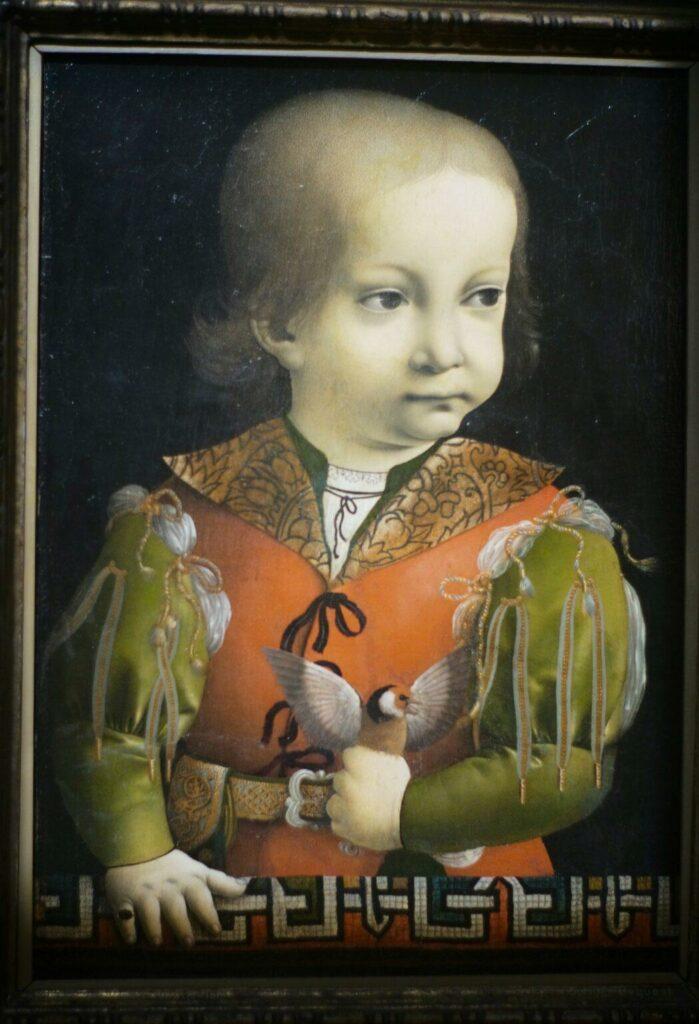
- Court Fashion: Narrow braided textiles were incredibly popular in royal courts for both clothing adornments and luxurious upholstery tapestry. A famous example is the Portrait of a Child (attributed to Marco d’Oggiono, 1470, exhibited at the Louvre Museum), which showcases complex historical braids and weaves.
What is Braiding Used For Today?
Though less famous than knitting or weaving, braiding is deeply integrated into modern life. We can separate its uses into two main categories:
Domestic and Everyday Uses :
- Fashion & Apparel: Hoodie drawstrings, shorts cords, belts, shoelaces, zipper pulls, and garment button loops.
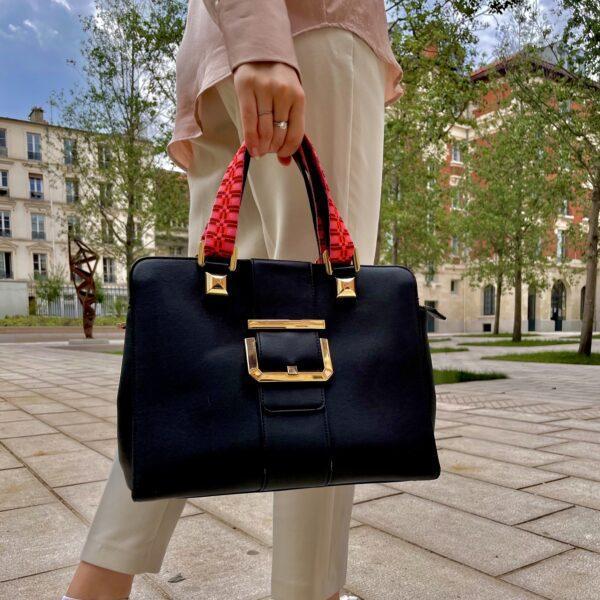
- Accessories: Eyeglass cords, bag handles, bracelets, jewelry cords, and keychains.
- Home & Pets: Window blind cords, vintage-style braided electrical cables, kitchen cooking twine, dog leashes, and horse lead ropes.
Industrial and Technical Uses
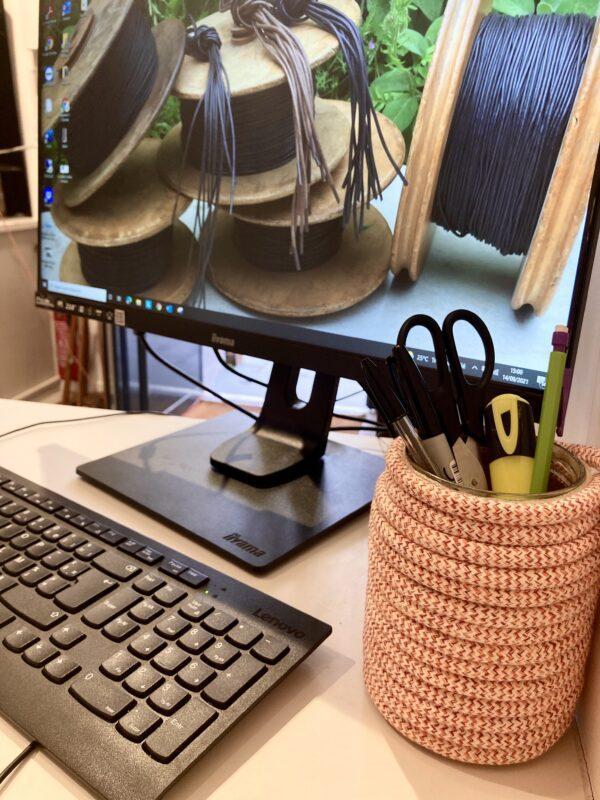
- High-Tech & Safety: Fiber optic shielding, thermal braided cords, dynamic climbing ropes, safety barrier cords, and arboricultural rigging lines.
- Marine & Insulation: Heavy-duty boat ropes (bouts), marine rigging, and specialized insulation sleeves.
Industrial Innovations: Small vs. Large Width Braiding
In the textile industry, fabrics are classified by their width (referred to as laize). While weaving and knitting can produce fabrics in small, medium, or large widths, braiding is traditionally restricted to small widths.
However, industrial history shows incredible attempts to break this barrier.
The Legendary 1001-Bobbin Loom
In the textile industry, fabrics are classified by their width (referred to as laize). While weaving and knitting can produce fabrics in small, medium, or large widths, braiding is traditionally restricted to small widths.
However, industrial history shows incredible attempts to break this barrier.
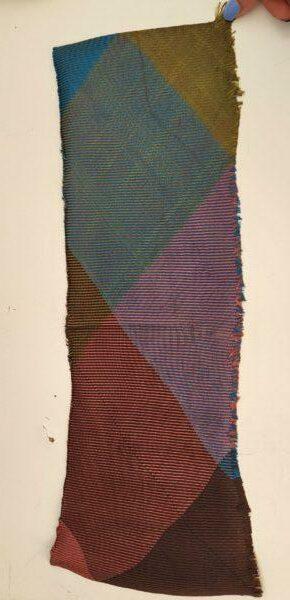
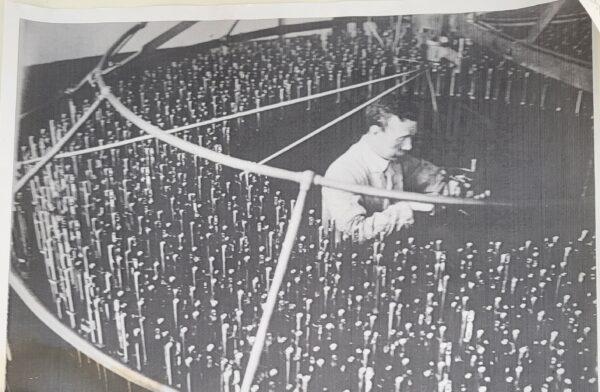
Between 1900 and 1920, the Manufactures Réunies in Saint-Chamond, France (known as “Les Manues”), engineered a gigantic metal braiding machine featuring 1001 bobbins (fuseaux). This massive machine measured 2.5 meters by 2.5 meters.
- The Mechanism: The bobbins moved in a complex, snail-like helical circuit, forming concentric circles that spiraled into a central half-turn point.
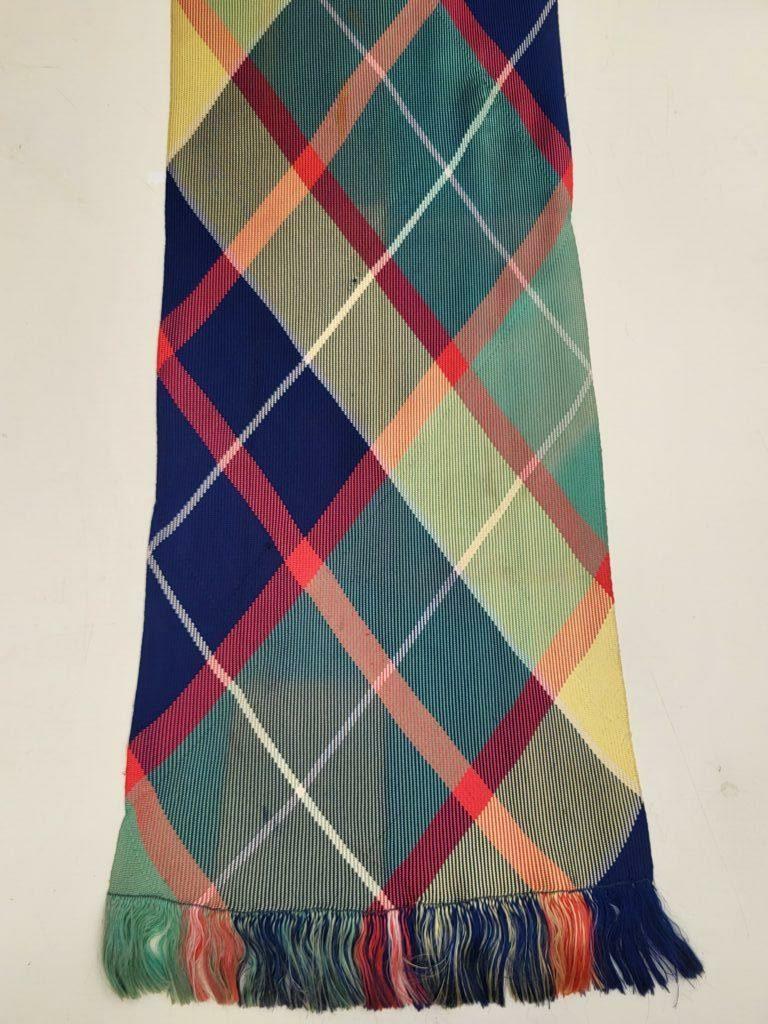
- The Result: It produced an unprecedented braided fabric of medium width, measuring approximately 43 centimeters wide. A partial setup of 601 bobbins was also used to create a 31-centimeter-wide braid.
- The Outcome: Due to its extreme mechanical complexity, difficulty to set up, and frequent manufacturing defects, this unique machine was eventually dismantled.
Between 1900 and 1920, the Manufactures Réunies in Saint-Chamond, France (known as “Les Manues”), engineered a gigantic metal braiding machine featuring 1001 bobbins (fuseaux). This massive machine measured 2.5 meters by 2.5 meters.
Elevating Braids: Textile Embellishment and Customization
Just like wide fabrics, narrow braided textiles can be enhanced, decorated, and transformed into true works of art.
Embroidery is a classic technique used to embellish textiles. In a separate article, we explore how braided products. Such as soutache, princess braids, flat braids, and small cords. Actively used as raw materials for luxury embroidery.
Beyond embroidery, modern customization techniques allow brands to add logos, patterns, and text onto narrow fabrics:
- Screen Printing (Sérigraphie)
- Digital Printing & Dye Sublimation
At SCF, we specialize in customizing cords, straps, and ribbons using screen printing and sublimation, constantly pushing the boundaries of what the traditional braiding technique can achieve.