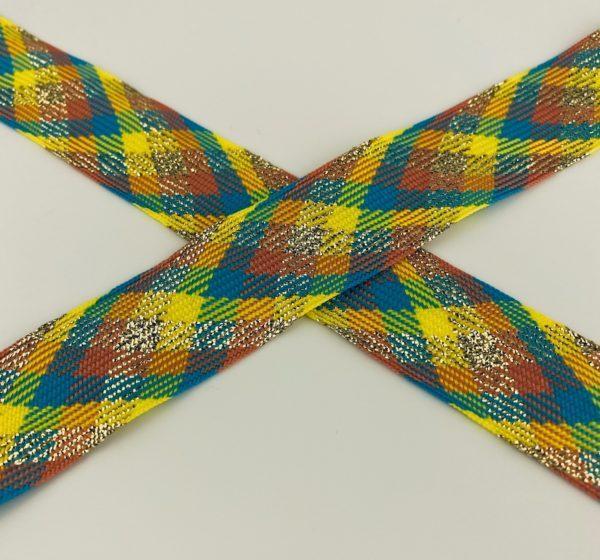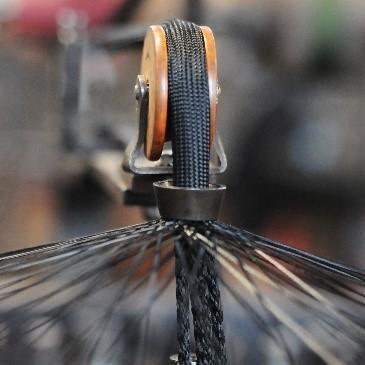
Braiding loom
Core of the braiding loom (Âme)
Threads or cotton wadding placed in the middle of a tubular braid during braiding; the core allows the braid to be rounder and reinforces it. If the core is made of rubber, the resulting braid is elastic.
Bobbin for the braiding loom (Canette)
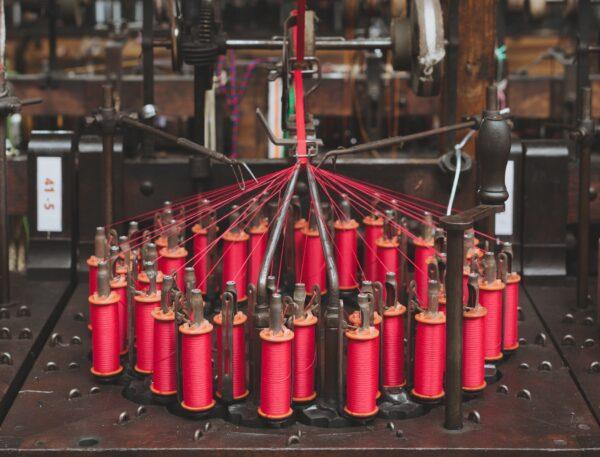
A small wooden (or plastic) cylinder around which thread is wound by a bobbin-winder.
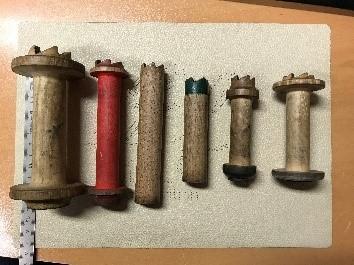
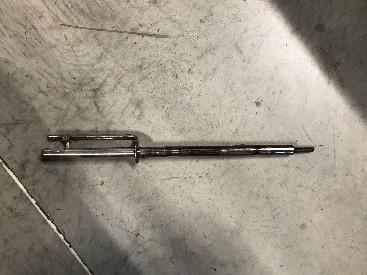
Spindle (Fuseau)
A tube-shaped metal piece on which the thread bobbin is positioned, and inside of which the tensioning spring (pump) is located.
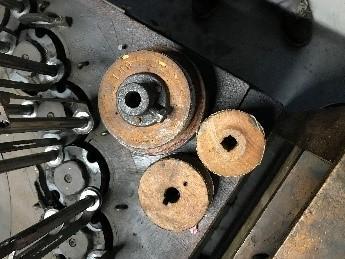
Braiding disc / drag weight (Emploi)
A round wooden piece that pulls the braid using a rough surface — now made of sandpaper, but formerly made of dogfish (shark) skin.
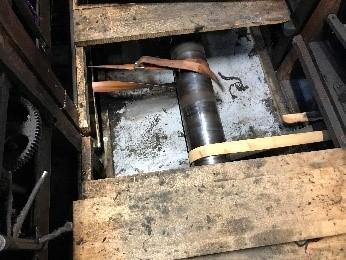
Main shaft (Menard)
The large shaft that drives the looms.
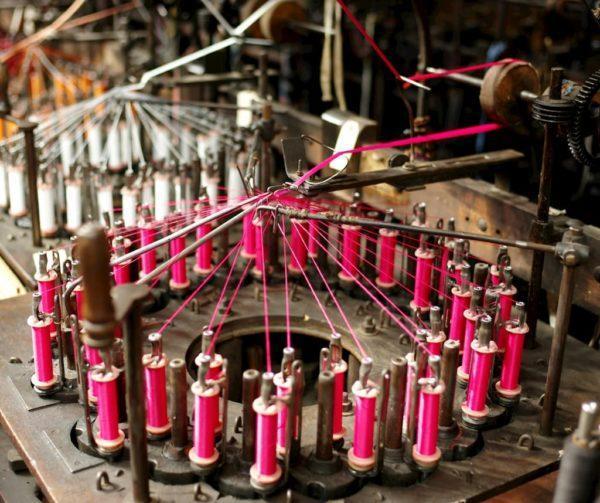
Open braiding loom (Métier ouvert)
A braiding loom in which the bobbins turn back in front of the loom on a five-slot carrier disc. These looms often have an odd number of bobbins, though there are also even-numbered looms called “Damier” (checkerboard) looms.
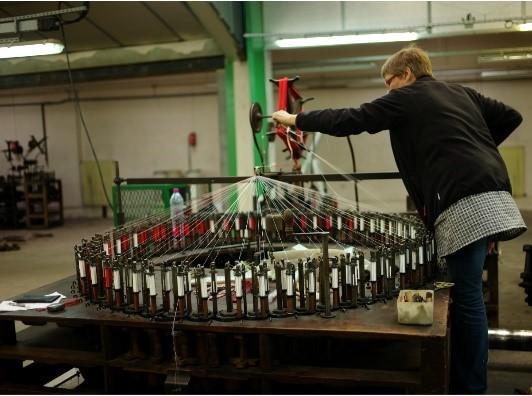
Closed braiding loom (Métier fermé)
A braiding loom in which the two front carrier discs touch each other, allowing the loom to be set up in either of two configurations: return-type or continuous-type.
Return-type loom (Braiding loom)
A braiding loom in which the bobbins turn back in front of the loom, thereby producing a flat braid. (Usually, but not always, an odd number of bobbins.)
Slot (Ouche)
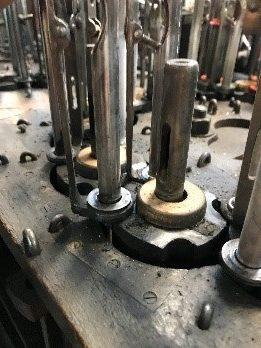
A notch in the carrier disc (poupée arbrée).
Carrier disc (Poupée colonne)
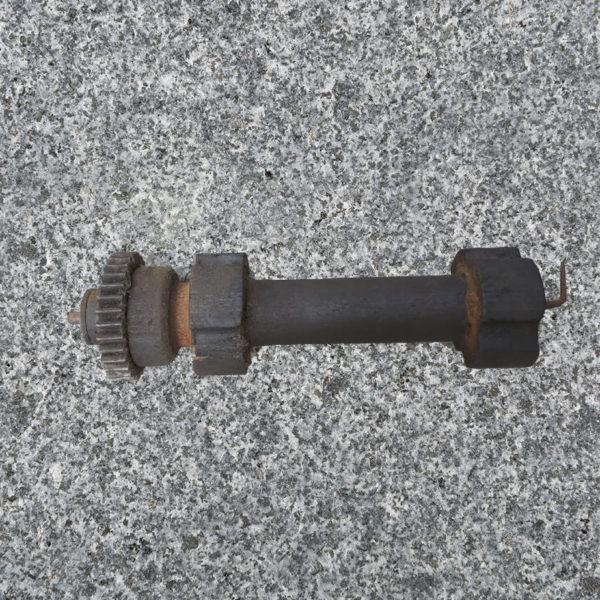
A rotating wood-and-metal shaft, with slots at the top in which the spindles are positioned.
Tubular braid (Tresse tubulaire)
A tubular braid forms a sheath that can be supplied for inserting cores into. If there is no core, the tubular braid lies flat; if there is a core, the braid is round or oval.
Flat braid (Tresse plate)
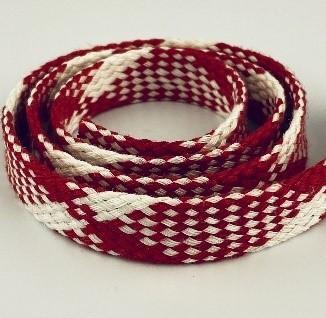
A flat braid forms a flat, non-tubular band. It is often slightly or strongly elastic in width due to the oblique crossing of the threads.