
Wooden braiding looms, also known as mechanical looms, were invented in the 18th century. Here is the history of wooden braiding.
A quick reminder: manual looms have existed for a very long time. They are no longer used in Europe, except for hobby activities. In Japan, these looms are still used under the name Marudai.
From their creation and history of wooden braiding
1748
Thomas Waldford, in Manchester, invents the first braiding machine.
1783
Mr. Perrault, father and son, improve this loom (automatic stop as soon as a thread breaks, wooden gear system, and development of the “goose foot” mechanism) and manufacture it in wood in L’Aigle (Normandy). The definitive model is then created
1785
Mr. Perrault, father and son, register a model of their creation at the Hôtel de Mortagne. This is the loom that can be seen at the Conservatoire National des Arts et Métiers (CNAM).
1808
Charles-François Richard, also known as Edmond Richard Chambovet, starts a lace production business (for shoes and corsets) on a wooden loom in Saint-Chamond.
1833
The Callet family creates a braid factory. François, Guy Camus’s father, will later buy it.
1850
The Callet family creates a braid factory. François, Guy Camus’s father, will later buy it.
1885
38 manufacturers employ 4,222 people, including 463 men, not counting the women workers doing accessory tasks — bringing this figure to between 6,700 and 7,200 people. Production had spread to a cluster of villages around Saint-Chamond, including Izieux, Saint-Martin-en-Coailleux, Saint-Julien-en-Jarez, Valbenoîte (Saint-Étienne), Grand-Croix, Saint-Paul-en-Jarez, La Terrasse, and Doizieu. Altogether this represented 1,200,000 spindles.
1898
14 small braid producers join together to create the Manus (Manufactures Réunies de Saint-Chamond).
1900
14 loom manufacturers.
4,000,000 spindles in operation in Saint-Chamond, which is called the “world capital of braid and lace.”
1950
Herzog invents the fast loom (based on Bockmüll’s invention). These looms produce 60 meters per hour (compared to 5 meters per hour for wooden looms) and allow a larger quantity to be produced in the same setup time as the wooden loom.
2013
SCF takes over the wooden-loom braid factory from Guy Camus.
2016
Guy Camus’s factory is moved from Haute-Loire to Maine-et-Loire, to the SCF site.
Since then, drawing on Guy’s expertise, SCF has kept the know-how alive, restores looms, and invents new products.
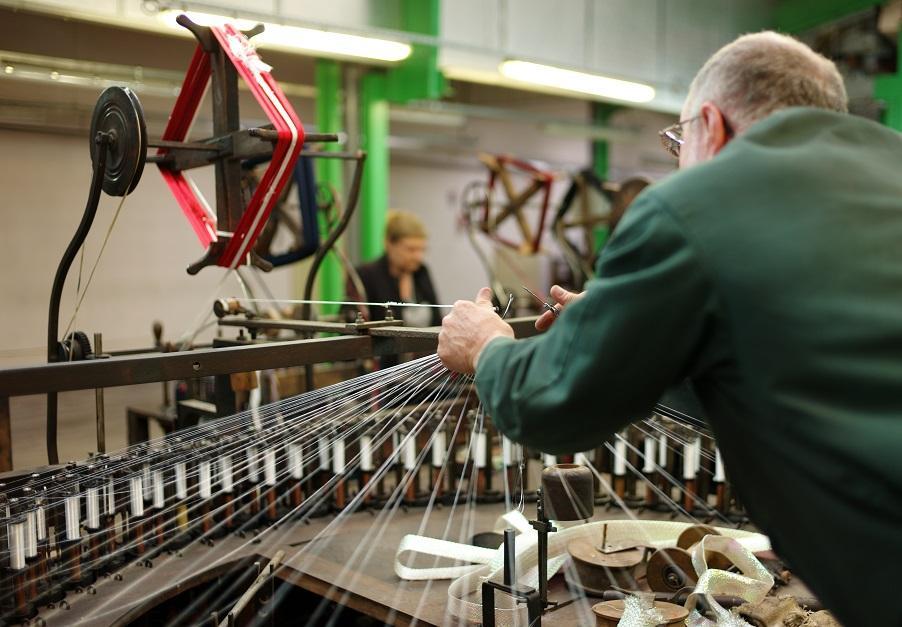
© SCF – 2015 – Guy on the 120-Spindle Loom

© SCF – 2015 – Maker’s mark of a loom manufacturer
Museums of wooden braiding looms: preserving the history
Four museums house working wooden braiding looms, allowing visitors to see their mechanism:
Musée — or Maison — des Tresses et Lacets
This is Guy Camus’s former factory, where 50 wooden braiding looms remain.
La Terrasse-sur-Dorlay (42)
www.tressesetlacets.com
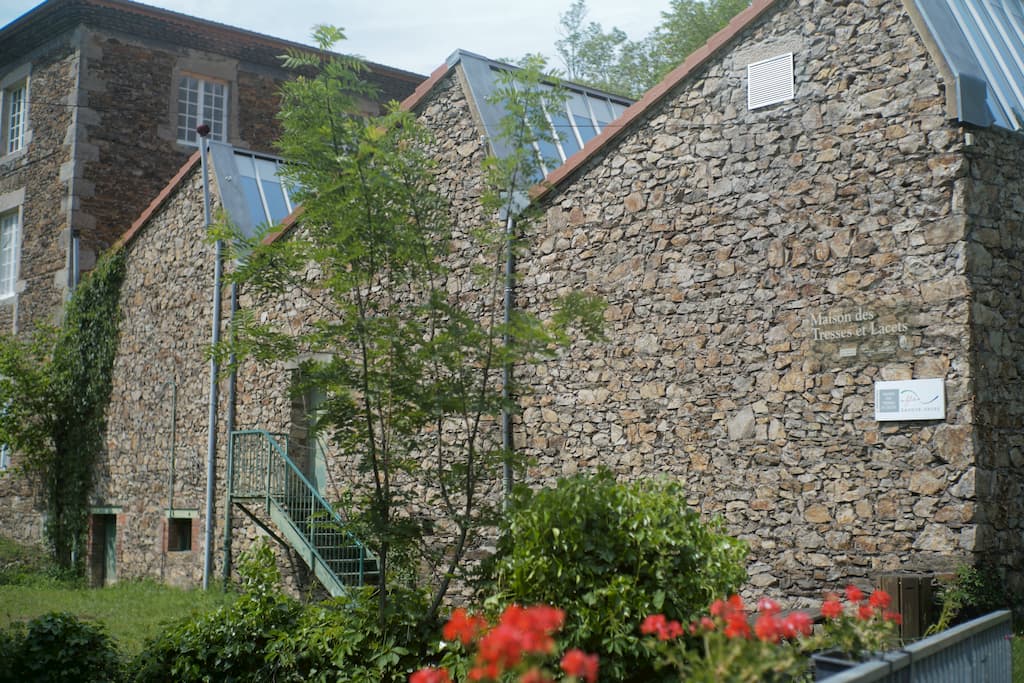
© SCF – 2019 – Maison de la Tresse et du Lacet
Corderie de Vallois
A mechanical ropeworks in operation since 1880. Several wooden braiding looms, an English loom, and others are in working order.
Notre-Dame-de-Bondeville (76)
corderievallois.fr
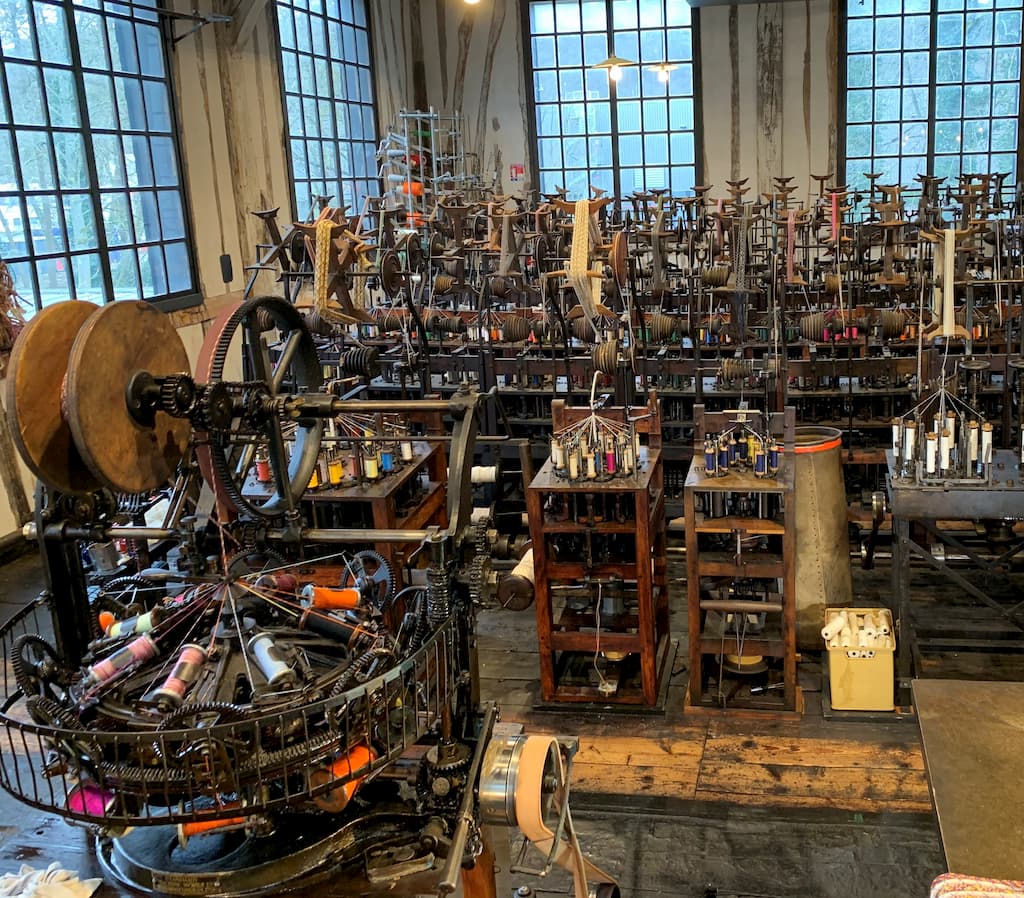
© SCF – 2020 – Corderie de Vallois
Musée d’Art et d’Industrie
Renovated by Jean-Michel Wilmotte and awarded the “Musée de France” label, it holds three technical collections of national and international significance: weapons, bicycles, and ribbons. These collections form an essential link between the past, present, and future of the Saint-Étienne region.
Saint-Étienne (42)
www.musee-art-industrie.saint-etienne.fr
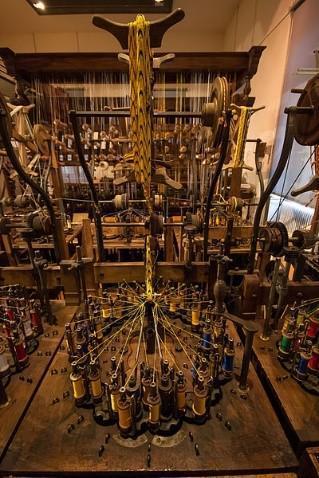
© Musée d’Art et d’Industrie – Saint-Étienne
Musée Départemental du Textile (Tarn)
Housed in a former 19th-century factory within the Haut-Languedoc Regional Nature Park, the museum stands as a valued witness to this industrial past.
Labastide-Rouairoux (81)
www.tourisme-tarn.com/patrimoine-culturel/musee-departemental-du-textile/
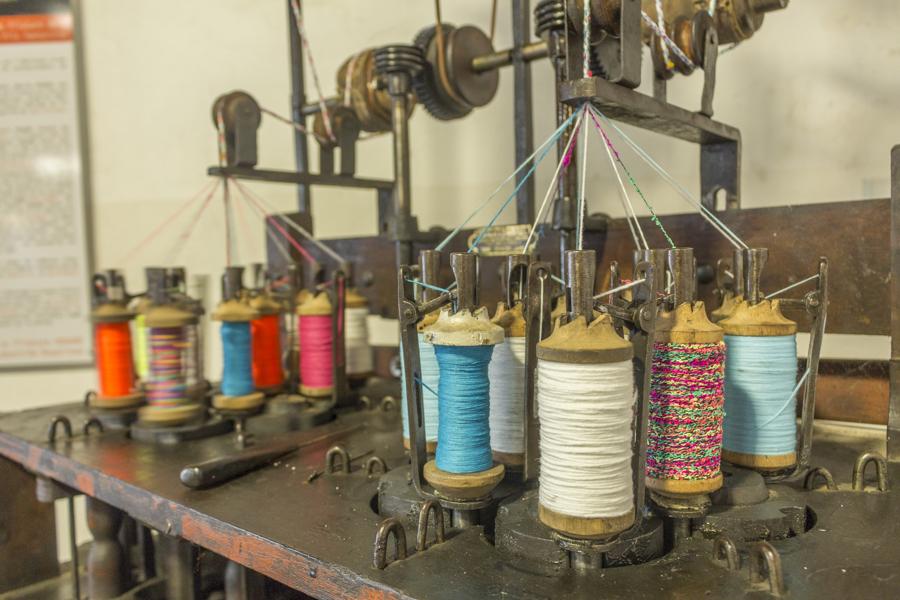
Industrial production
Industrial production using wooden braiding looms still exists today:
SCF
With 1,062 looms across 135 different loom types; the largest has 120 spindles.
Beaupréau-en-Mauges (49)
www.scfl.fr
Gauthier Fils
French manufacturer of textile braids.
Vertolaye (63)
Atelier Sara Revil
Art workshop specializing in braiding and passementerie.
Saint-Chamond (42)
Learn wooden-loom braiding yourself!
Want to learn more about the history of these slow-revolution looms and get hands-on with an age-old craft?
Join one of our introductory workshops!